LangChain vs LangGraph: Building Intelligent Workflows in 2025
Choosing between linear chains and cyclic graphs for AI orchestration? I break down when to use LangChain's simplicity versus LangGraph's stateful, cyclical power for complex agent workflows.
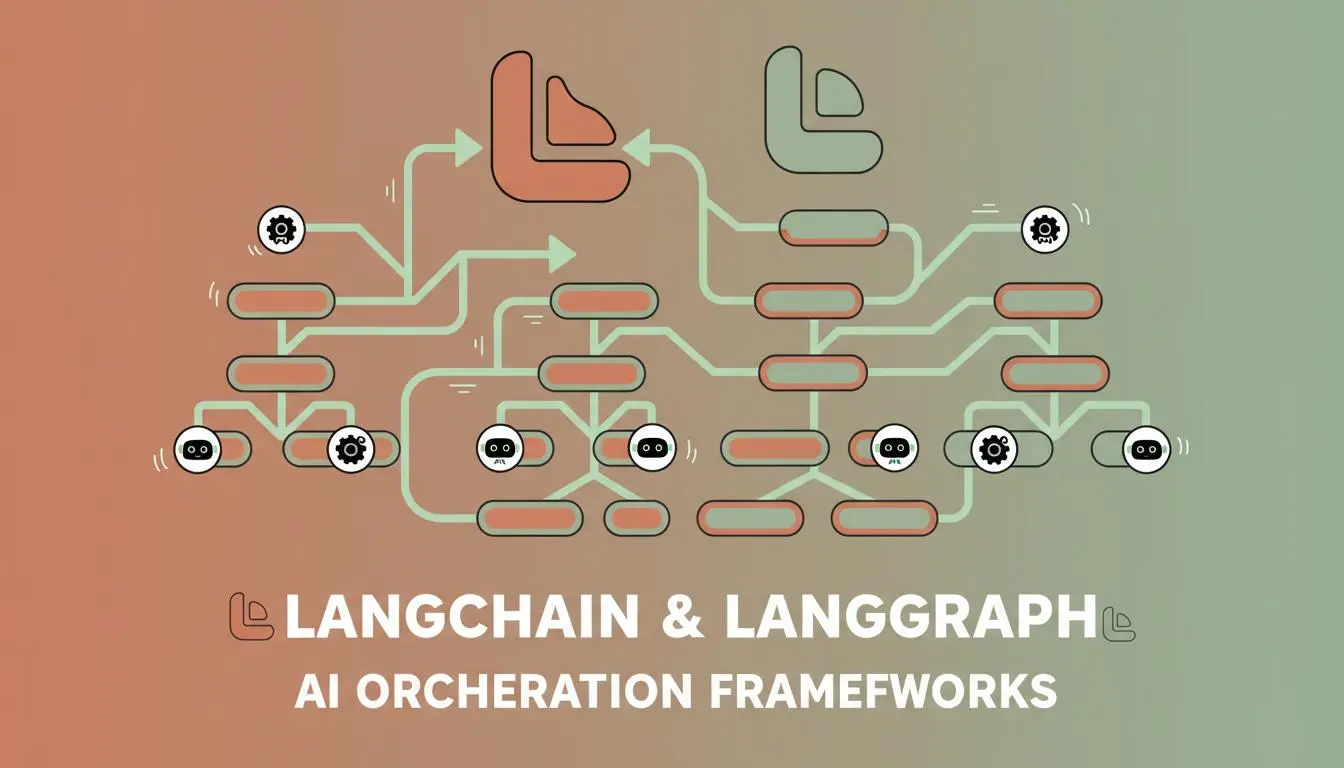
LangChain and LangGraph are often described as competitors, but in practice I treat them as two layers of the same stack. LangChain gives me batteries-included primitives — loaders, retrievers, prompt templates. LangGraph gives me a way to wire those primitives into something that can loop, branch, and remember.
The mental model that finally clicked for me: LangChain is the toolbox, LangGraph is the assembly line. A simple 'retrieve, then answer' flow is a one-liner in LangChain. The moment I need 'plan, call a tool, evaluate, maybe re-plan' I reach for LangGraph nodes and edges.
State is the real differentiator. LangGraph treats state as a typed object that flows through the graph, which makes debugging dramatically easier — I can serialize a run, inspect every intermediate state, and replay from any node. That alone has saved me from days of 'why did the agent do that?' archaeology.
Where people get burned is using LangGraph for problems that don't need it. If your workflow is genuinely linear, a graph just adds ceremony. I keep a simple rule: if I can draw the workflow as a straight line on a napkin, it stays in plain LangChain (or even raw SDK calls).
In 2025, the interesting work is in agent workflows that supervise other agents — and that's squarely LangGraph territory. But the foundation is still the same boring, well-tested LangChain components underneath.