How I Built an AI-Assisted ERP: Lessons from Production
Building an AI-assisted ERP system taught me more than any tutorial. From designing agent-based inventory workflows to handling real-world edge cases, here are the production lessons I learned.
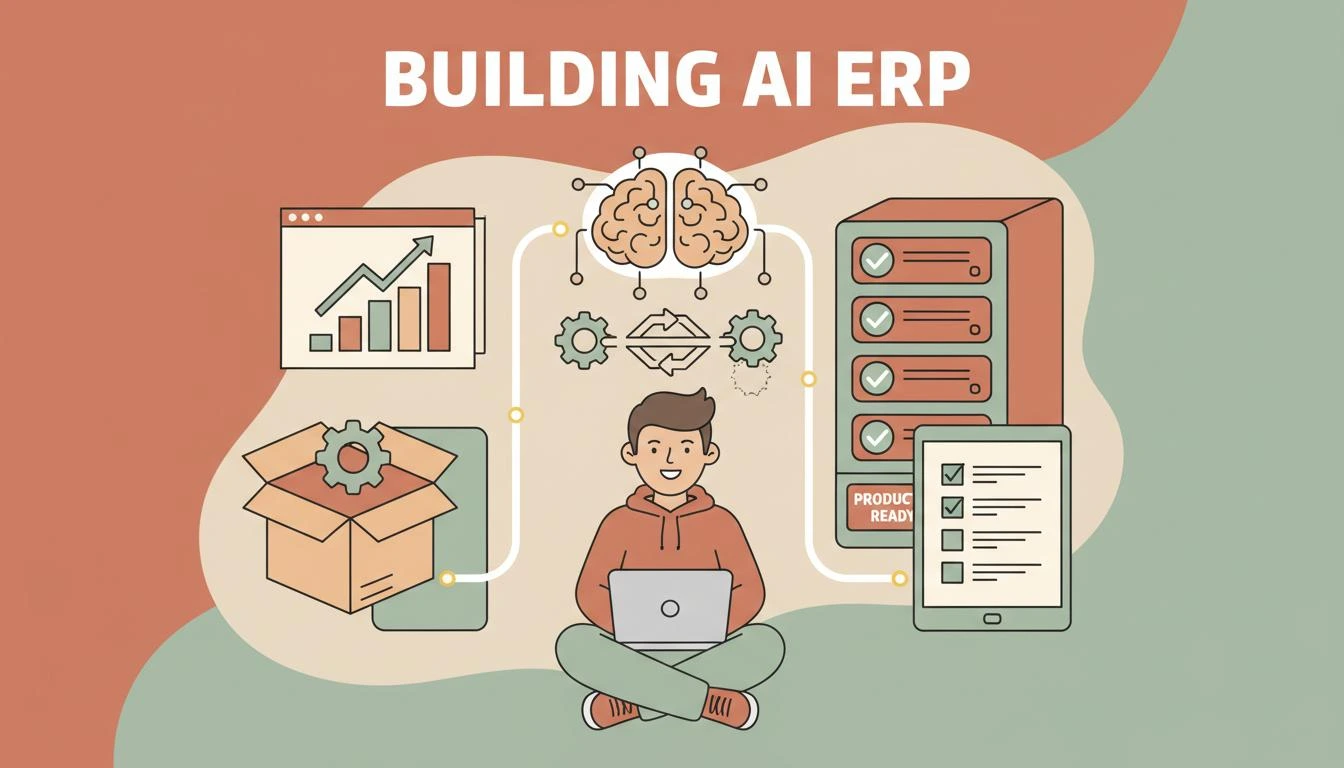
ERP is the most boring, most political, and most consequential software in any company. Adding AI to it sounds exciting until you realize a single hallucinated journal entry can cost a finance team a week of reconciliation. That tension shaped every design decision in the project.
The first lesson was scope. We didn't ship 'an AI ERP'. We shipped one assistant — a purchase-order drafter — that pre-filled forms based on historical data and supplier emails. Users still clicked Submit. Adoption was instant because nothing got worse if the AI was wrong.
The second lesson was data. Generic models knew nothing about our chart of accounts, our suppliers, or our internal SKU naming. A small RAG layer over our own master data did more for accuracy than any prompt engineering trick. Boring data wins over clever prompts, every time.
The third lesson was auditability. Every AI-assisted action writes a structured record: which model, which prompt version, which retrieved documents, which user approved it. When auditors showed up, we handed them a query, not a story.
If you're about to bolt AI onto an ERP, resist the urge to automate end-to-end. Ship assistants, not autopilots. Measure how much typing you removed, not how 'intelligent' the system feels. The boring metrics are the ones that survive a quarterly review.